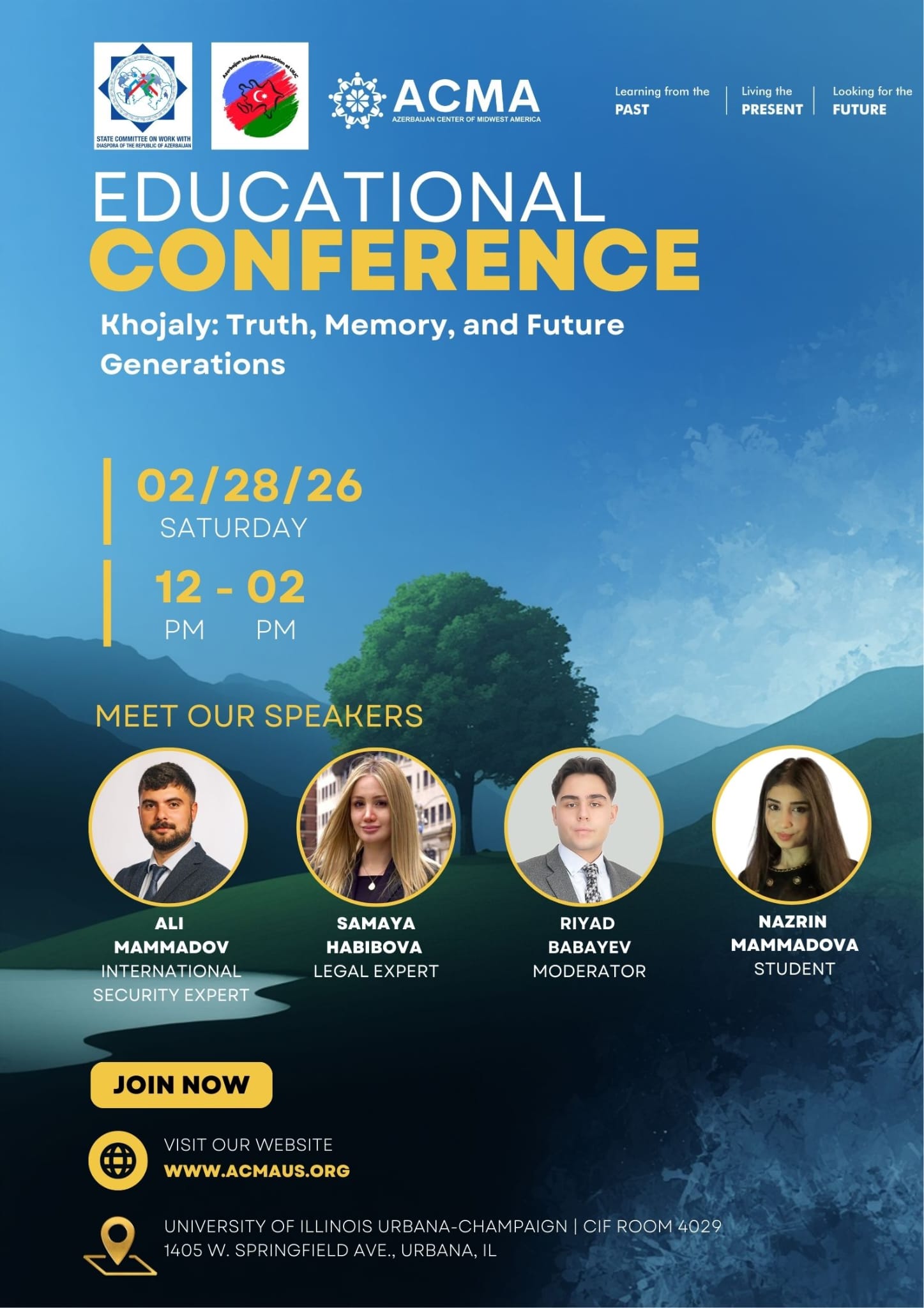
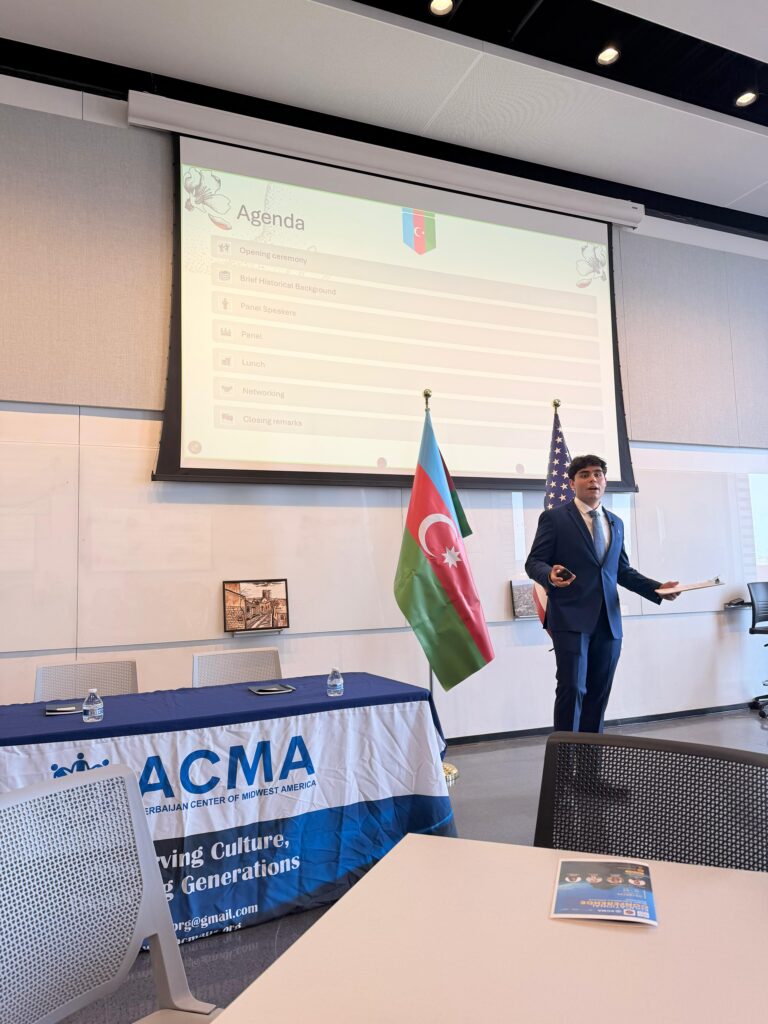
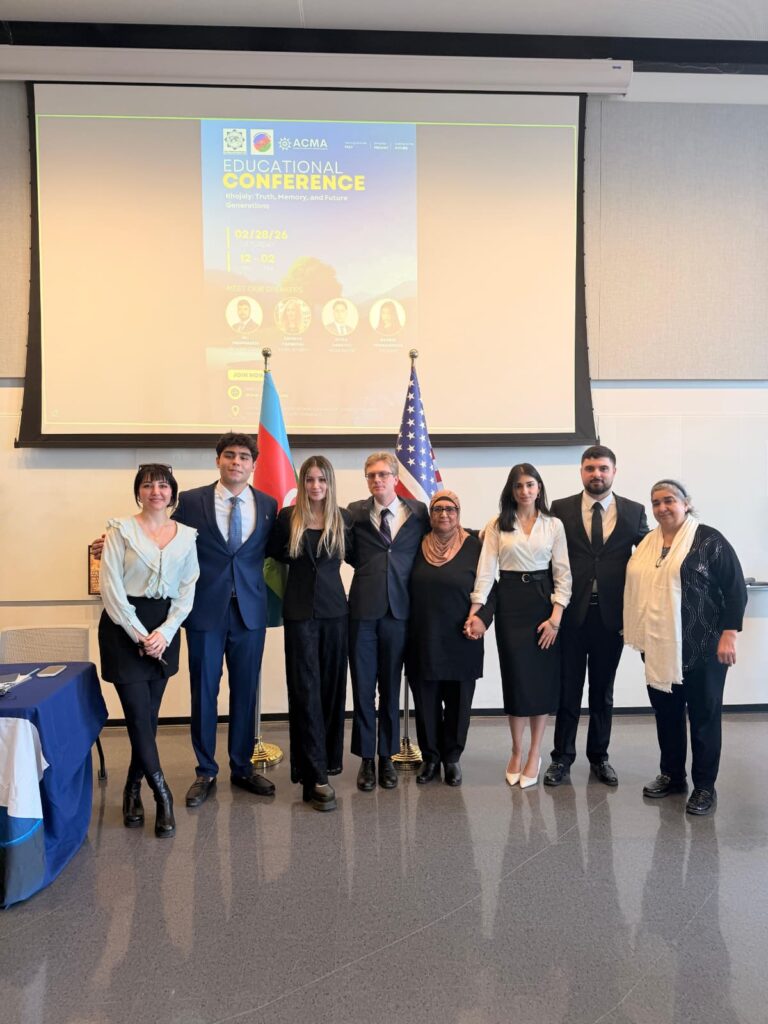
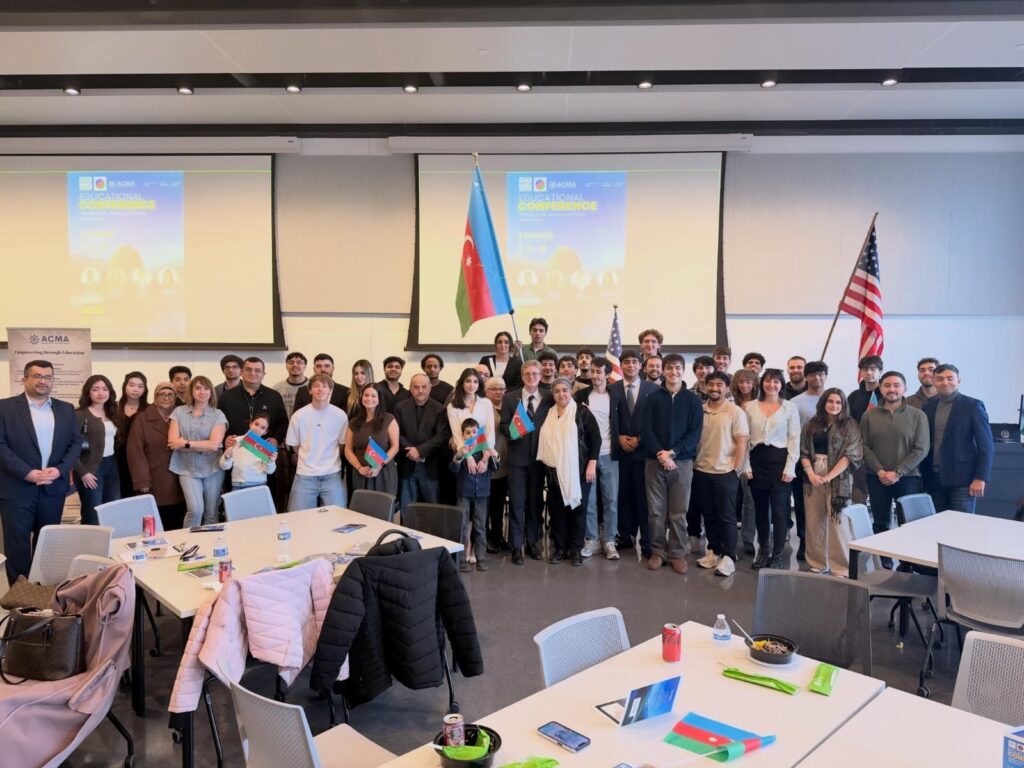
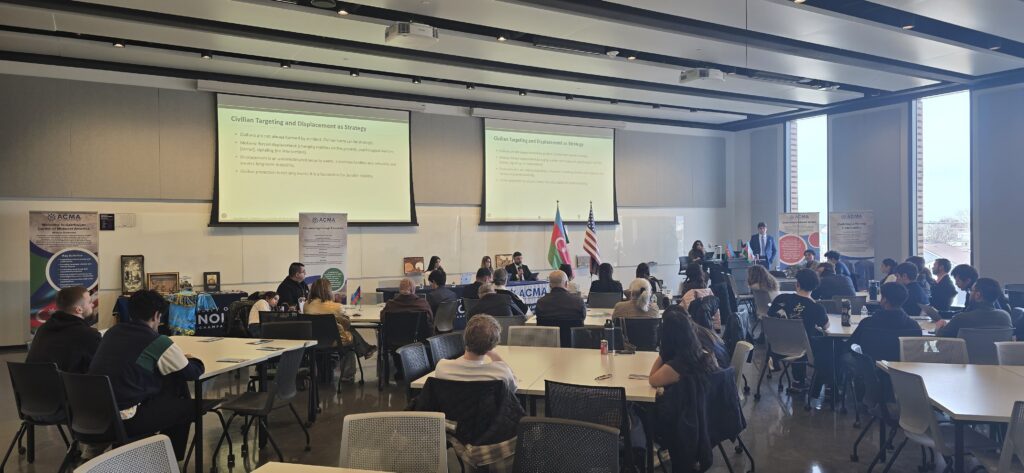
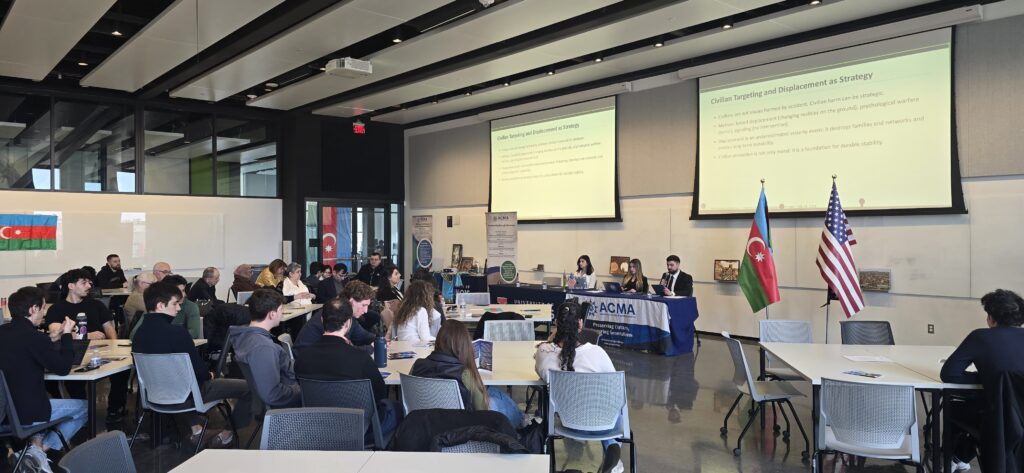
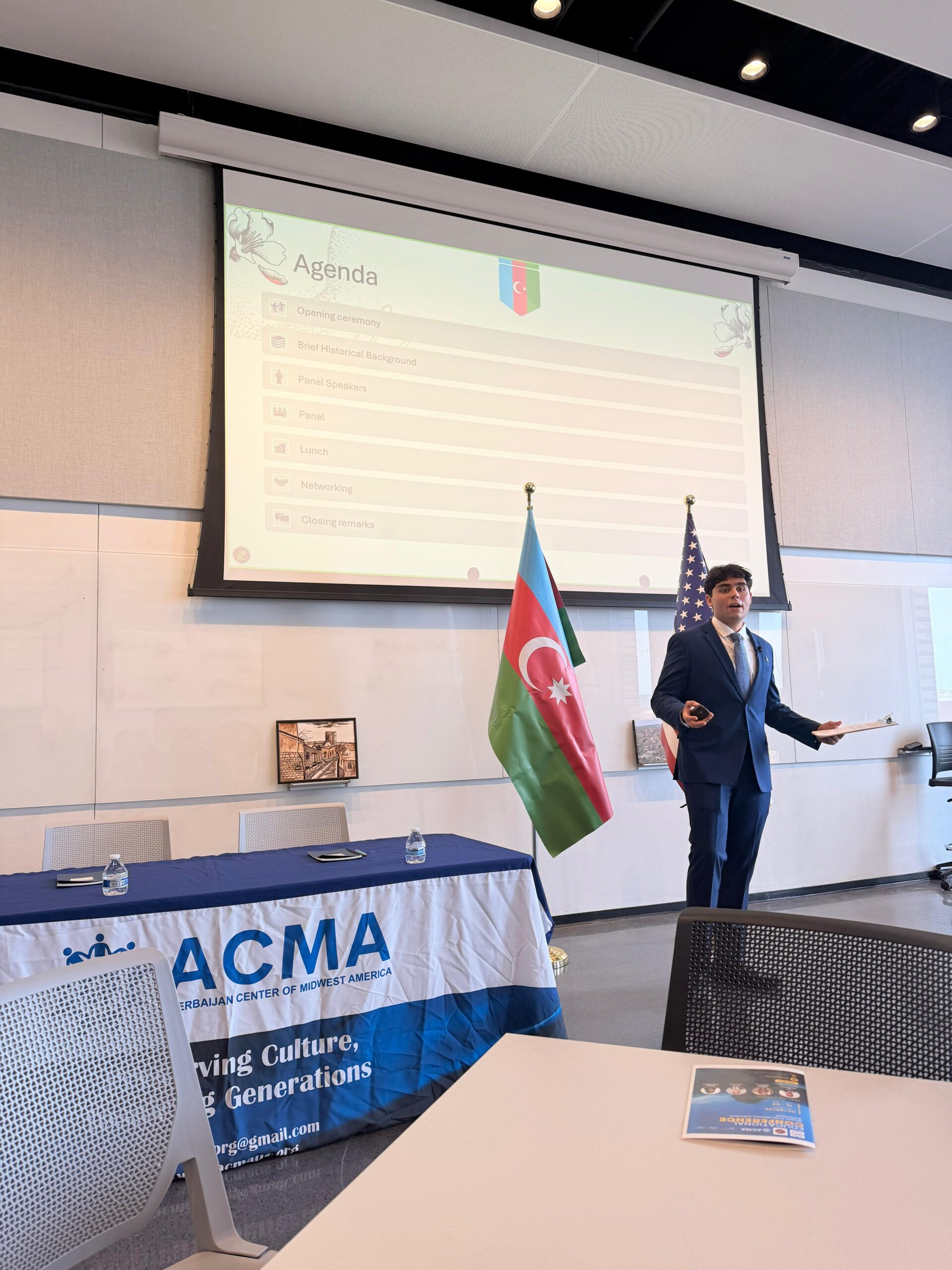
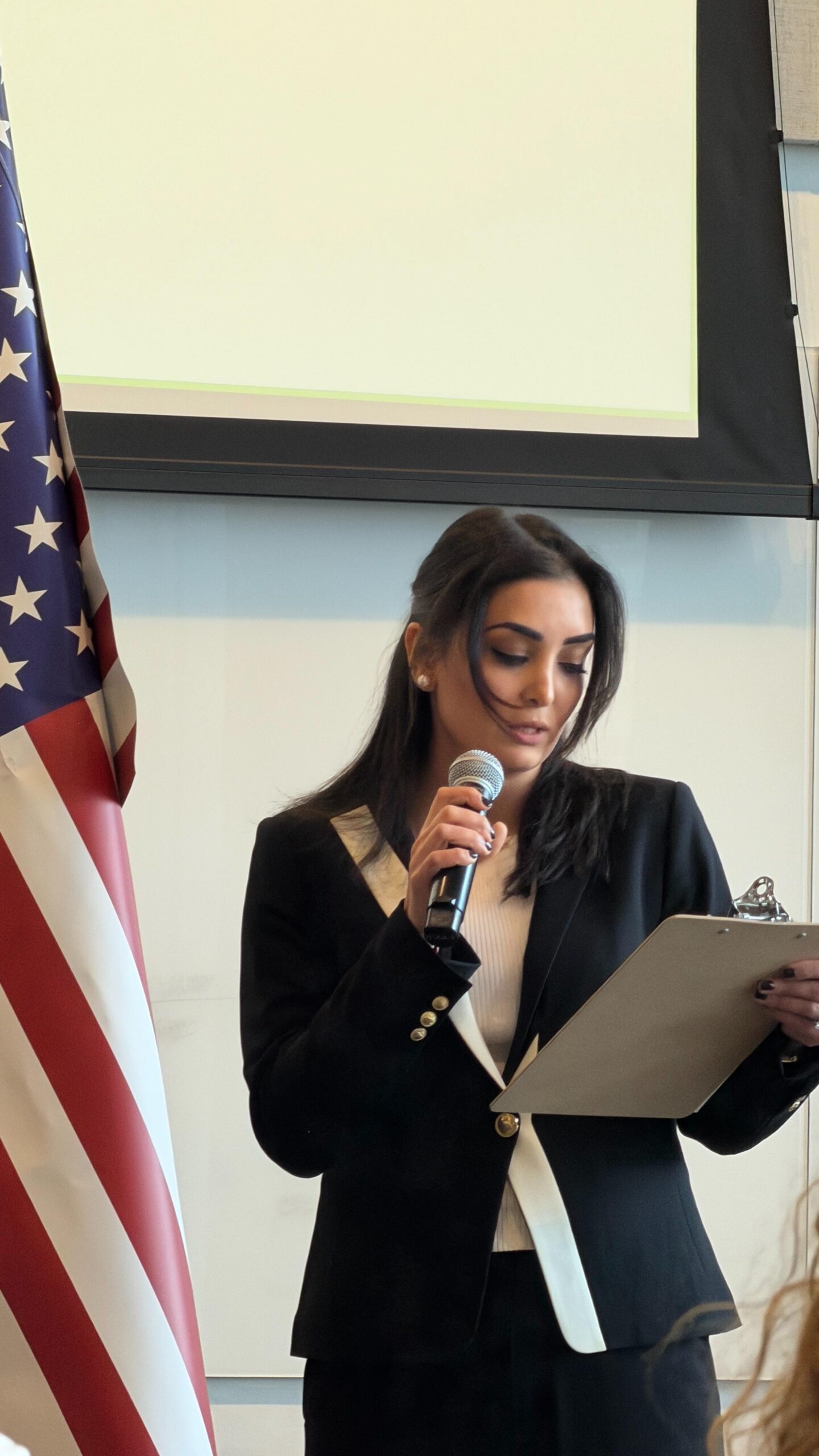
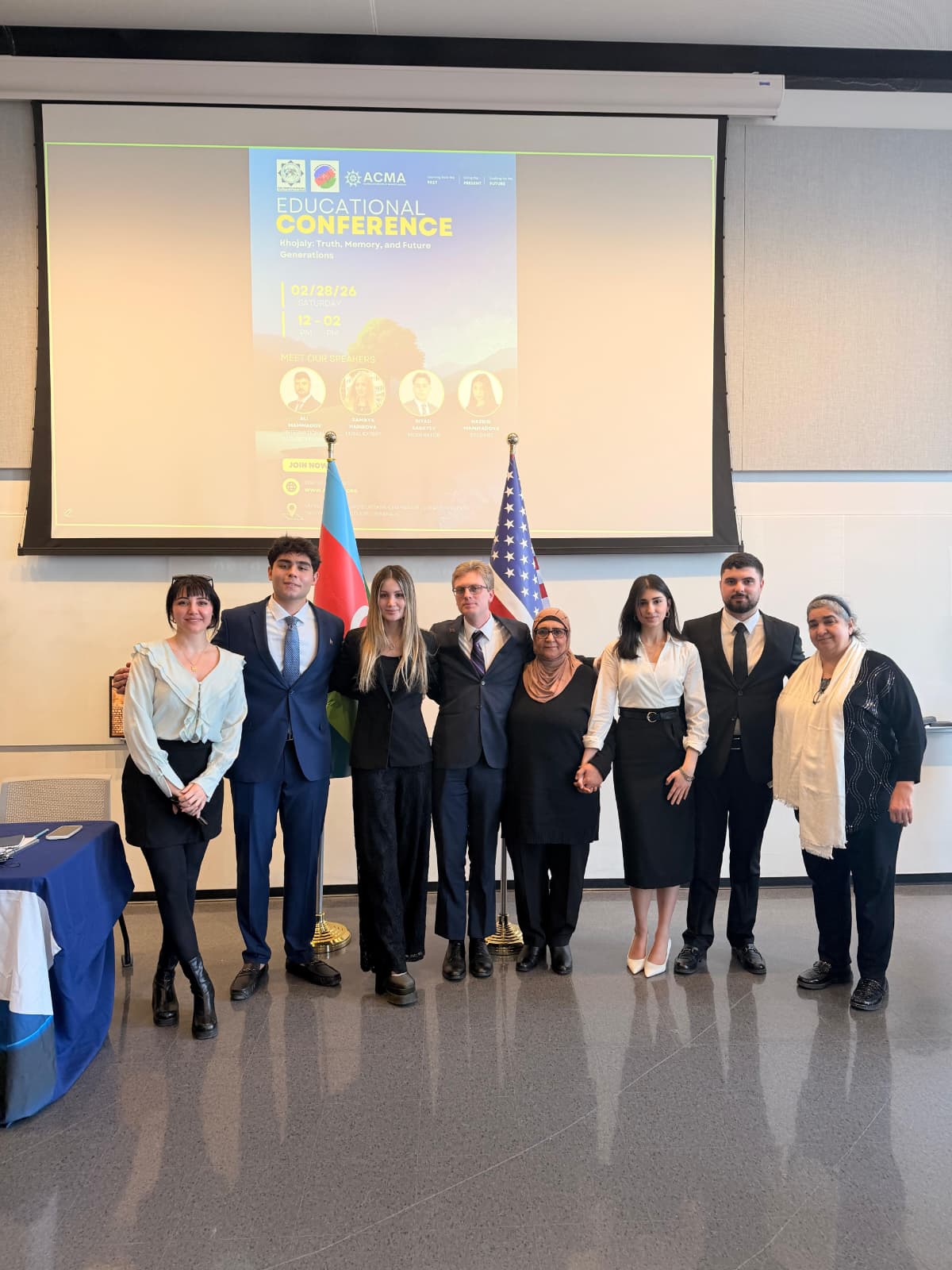
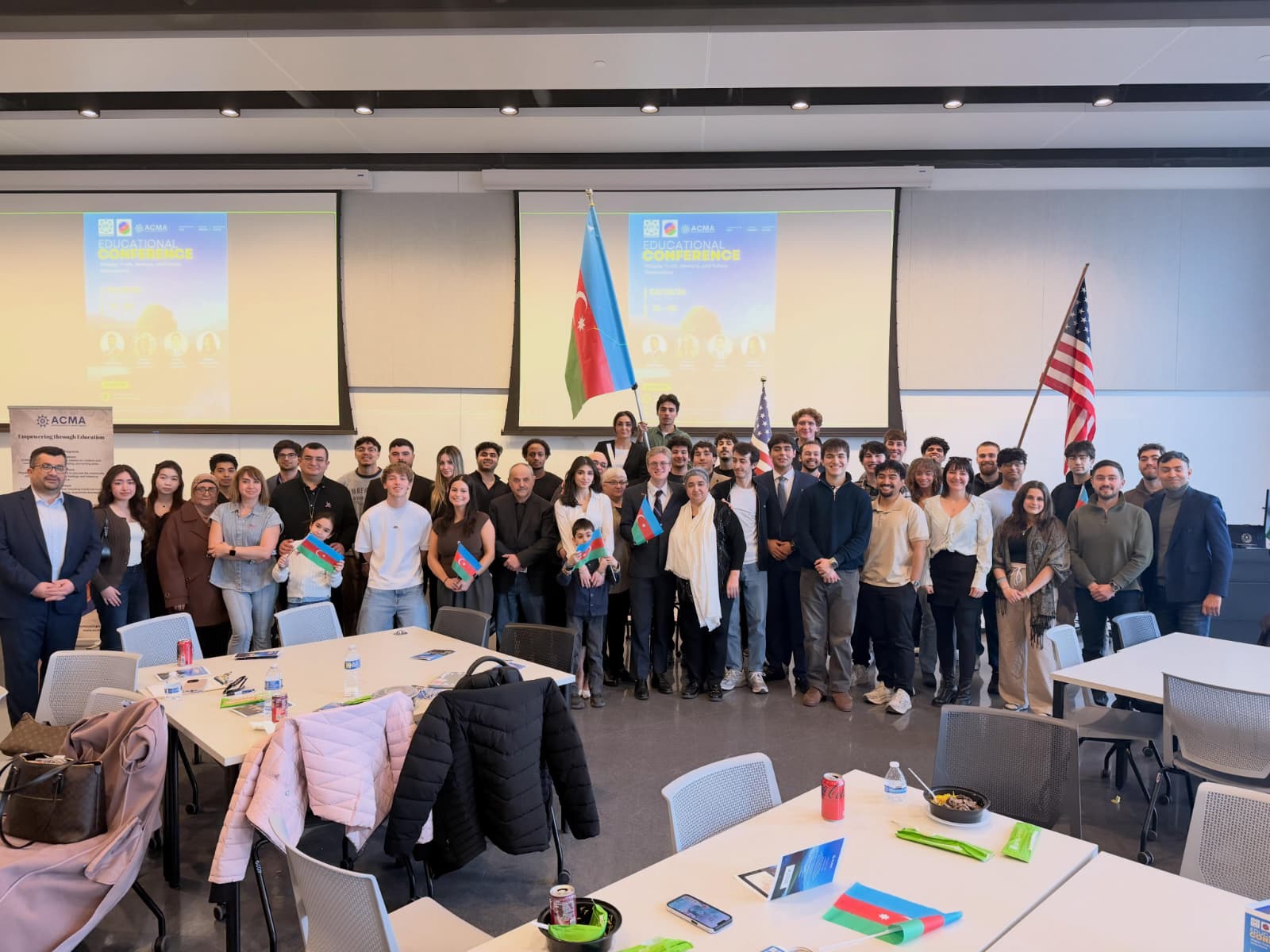
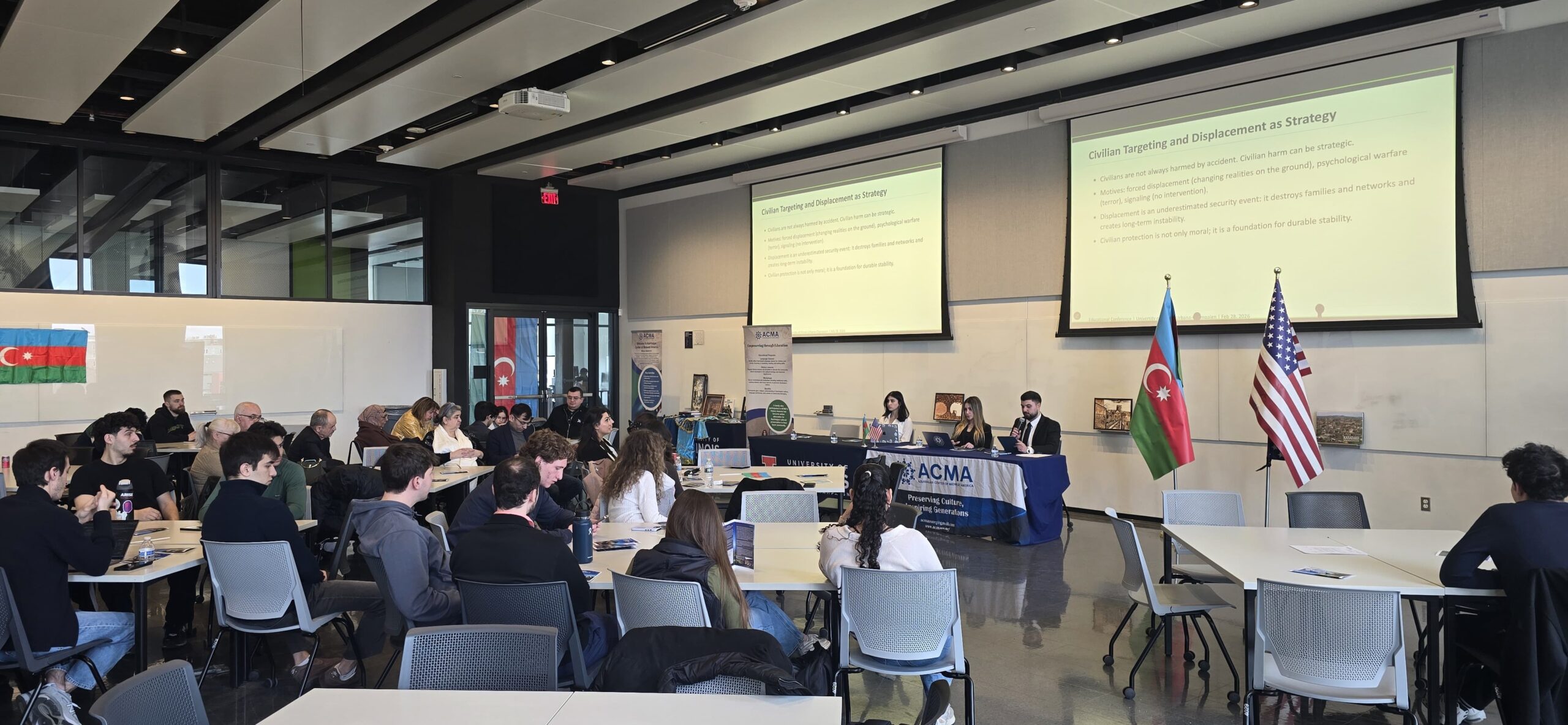
The program began with welcoming remarks by Riyad Babayev, representing the Azerbaijani Student Association, who greeted attendees and opened the ceremony. This was followed by the national anthems of the United States and the Republic of Azerbaijan.
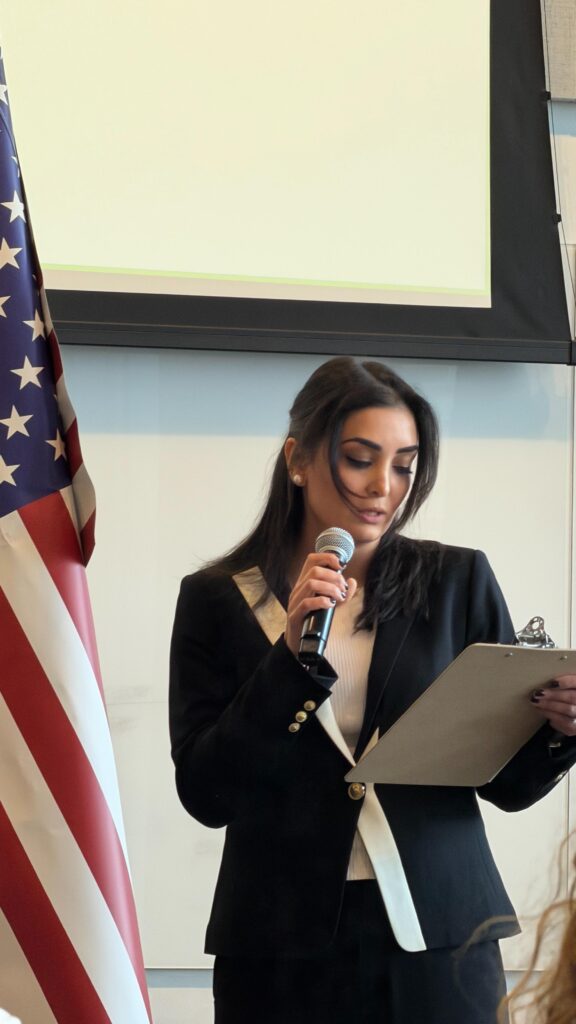
Following the anthems, Mehriban Mammadova, Co-Founder of the Azerbaijan Center of Midwest America, welcomed guests and noted that the organization holds similar remembrance and educational events annually. She also mentioned that a comparable academic conference was organized the previous year in the Chicago area at Harper College.
Farid Mammadov, founder of ACMA and one of the event supporters, then addressed the audience, emphasizing the importance of remembrance, historical education, and countering misinformation through academic engagement and public dialogue.
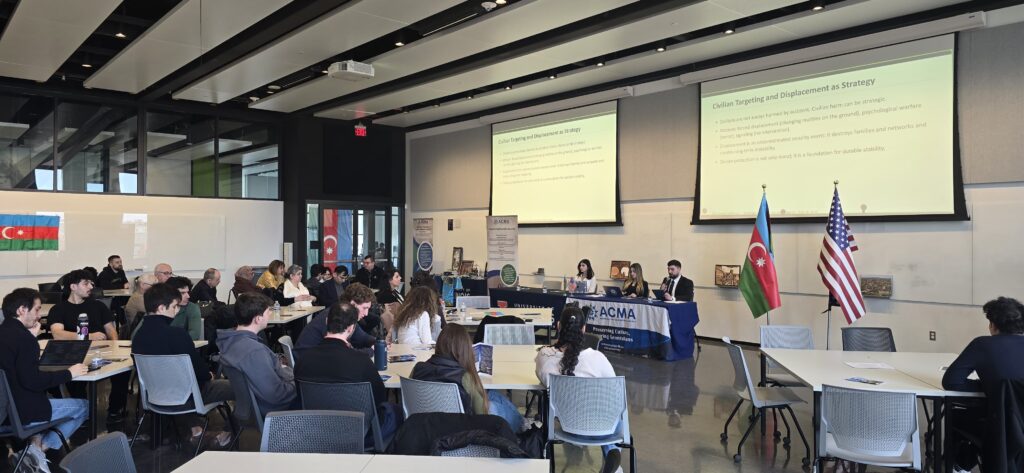
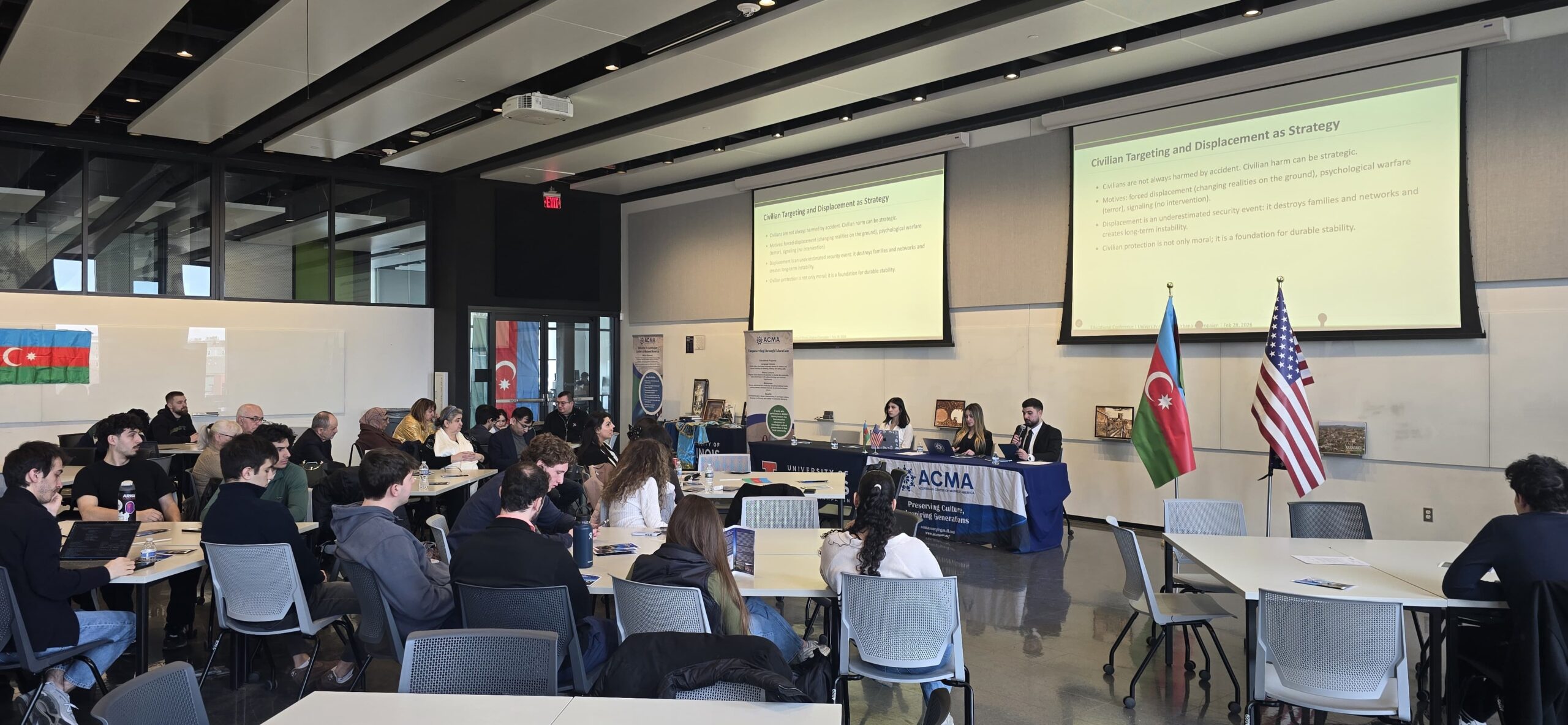
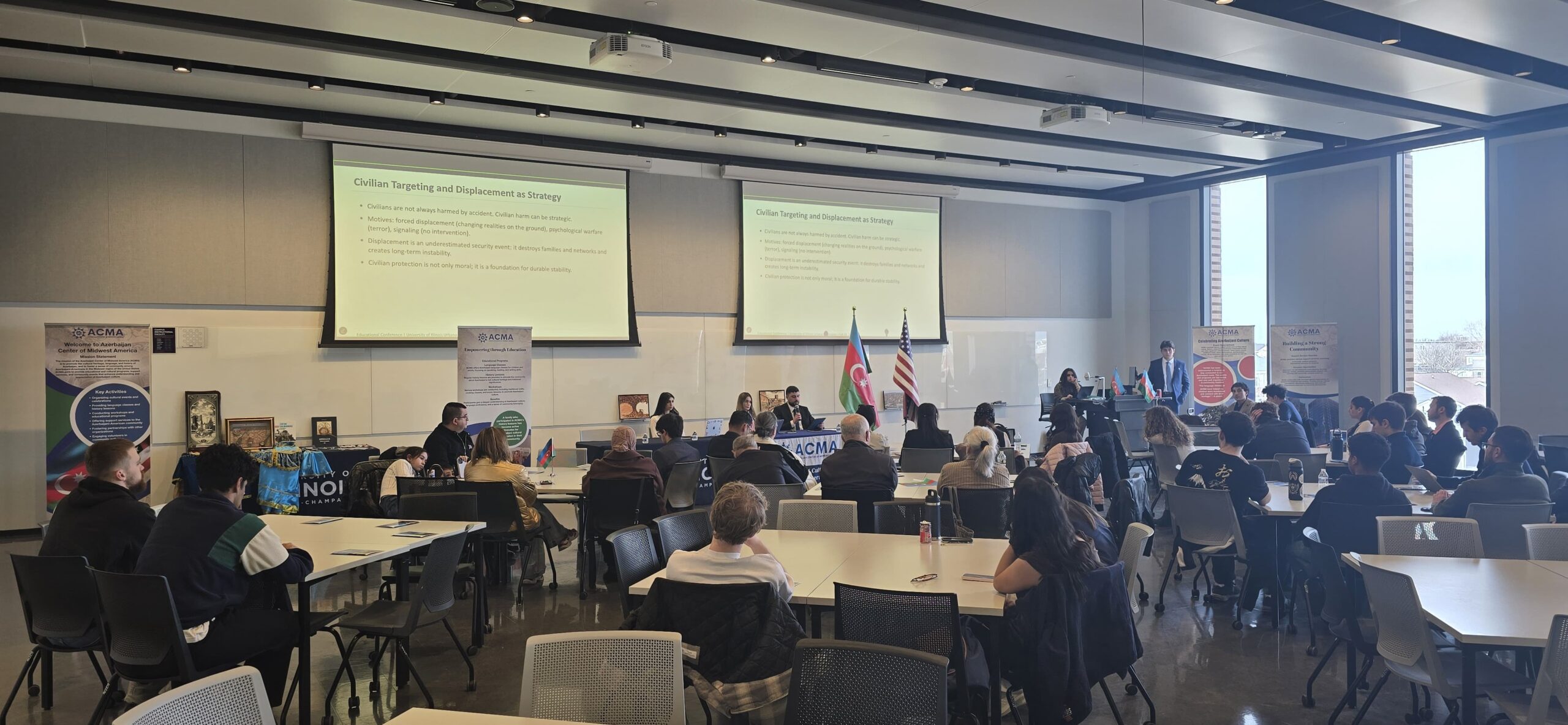
The conference continued under the moderation of Riyad Babayev, who introduced the speakers and guided the program proceedings.
A special guest, Vusala Mehdiyeva, Counselor from the Embassy of the Republic of Azerbaijan, delivered remarks highlighting humanitarian values, international awareness, and the importance of educating younger generations about historical tragedies and the protection of civilians.
Student presenter Nazrin Mammadova spoke about the historical background of the Khojaly tragedy and the responsibility of future generations to preserve historical memory. Her presentation included a short video testimony from a survivor of the Khojaly events.
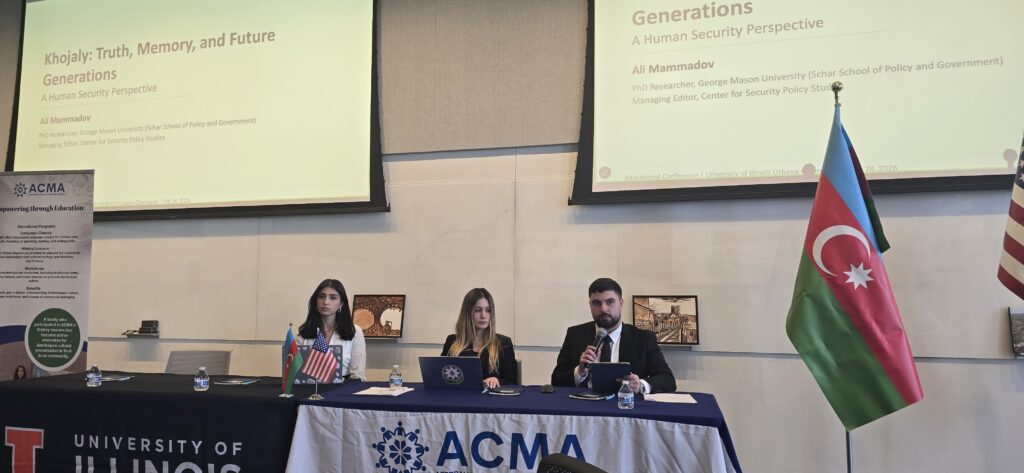
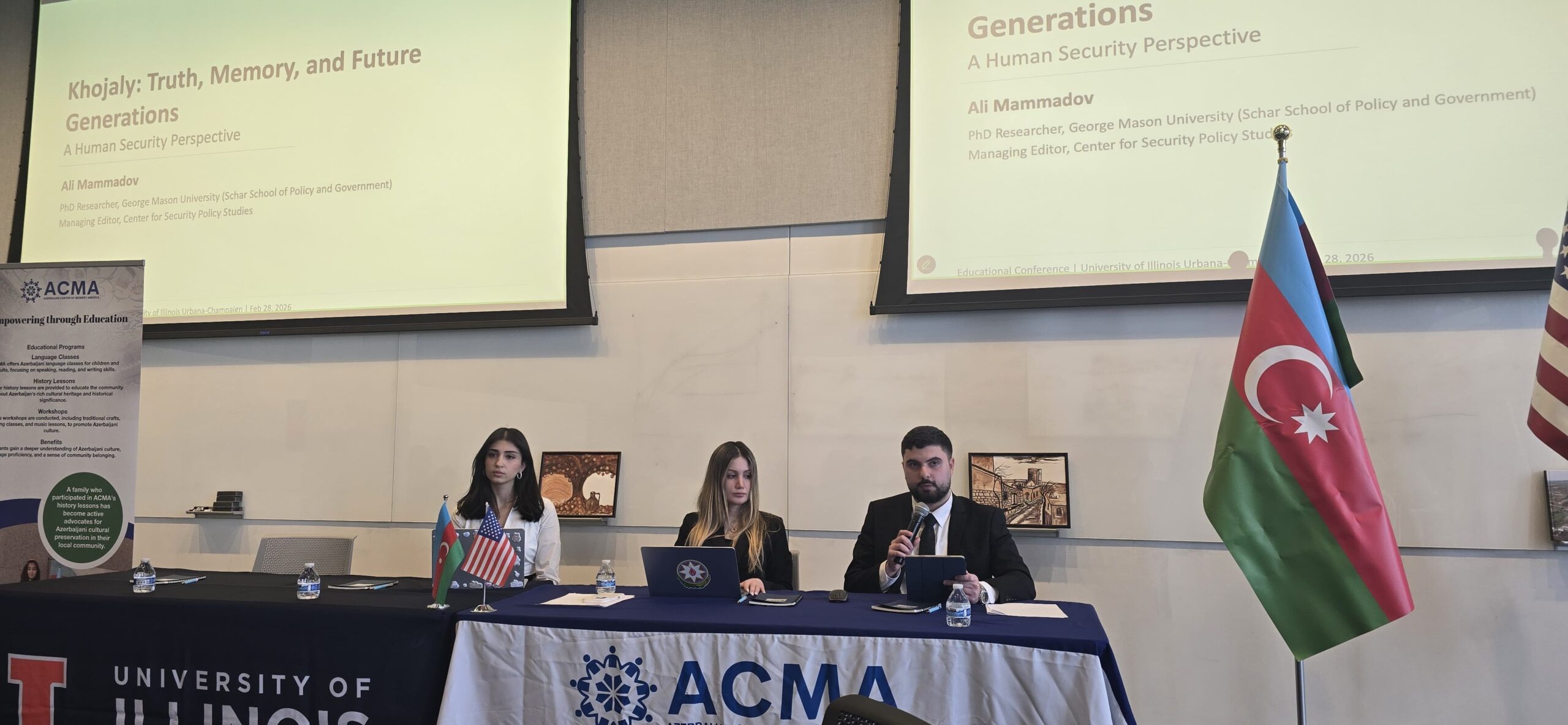
Ali Mammadov, an international security expert, presented an analysis of the regional security environment of the early 1990s, the geopolitical context of the conflict, and the impact of armed conflicts on civilian populations. He also addressed the importance of international awareness, media literacy, and education in preventing the recurrence of humanitarian tragedies.
Samaya Habibova, a legal expert, discussed the events from the perspective of international humanitarian law, explaining civilian protection principles and legal accountability for crimes against civilians under international legal frameworks. She emphasized the role of documentation and academic research in strengthening global understanding of such events.
The conference concluded with closing remarks by moderator Riyad Babayev followed by a question-and-answer session with attendees.
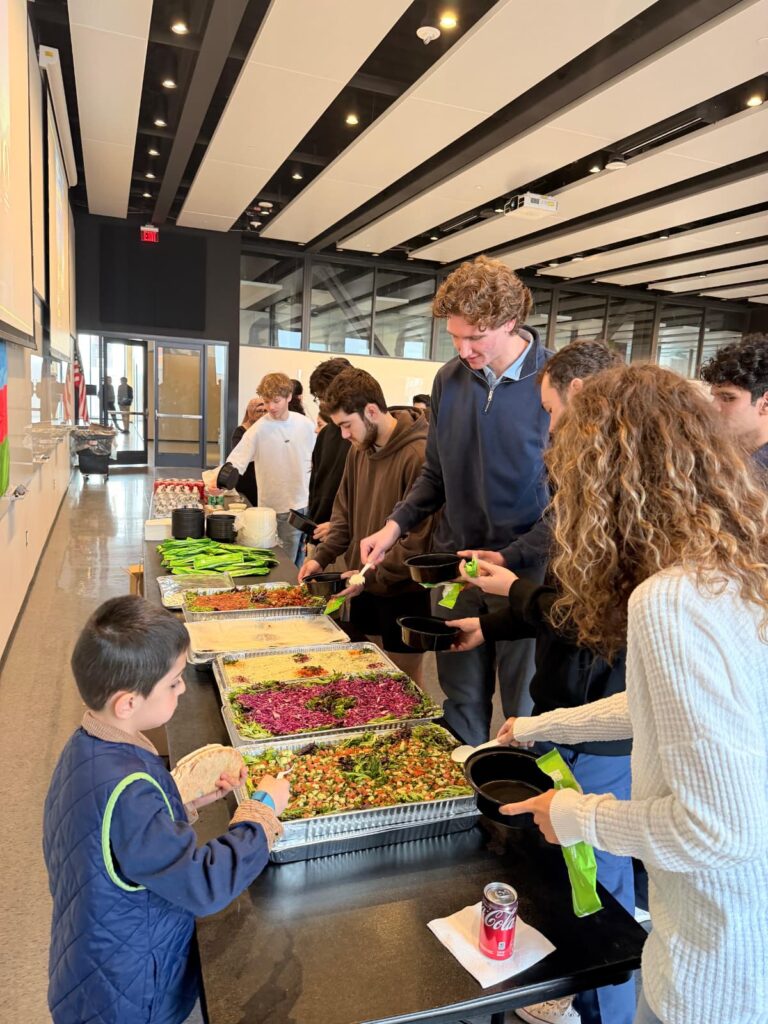
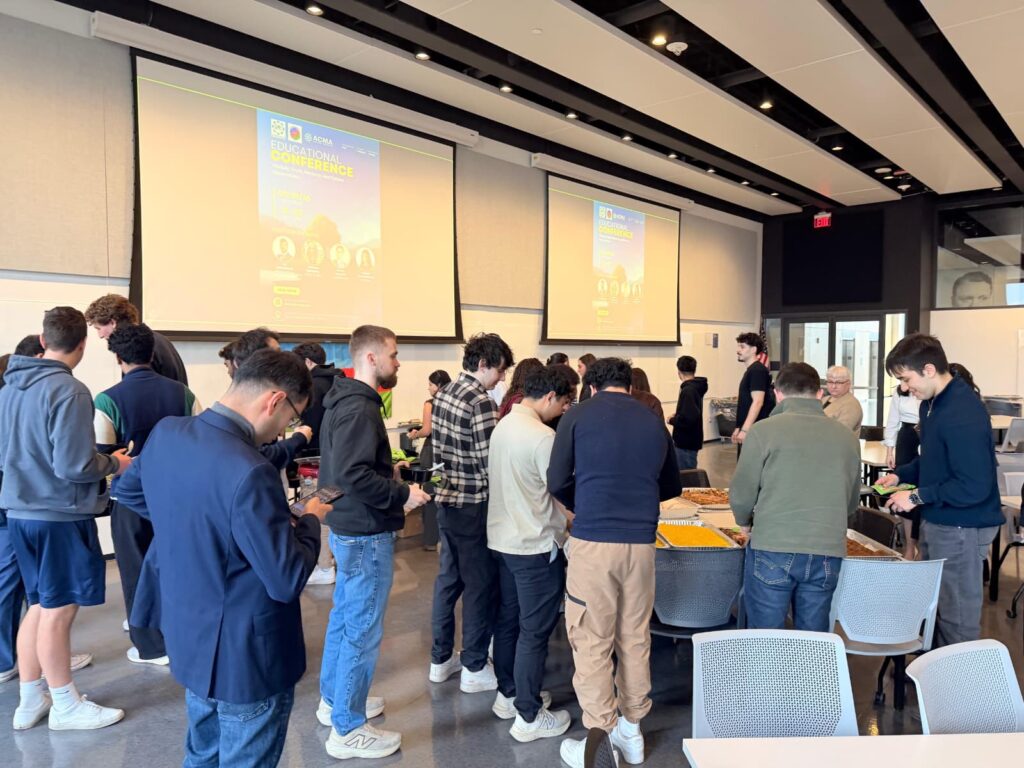
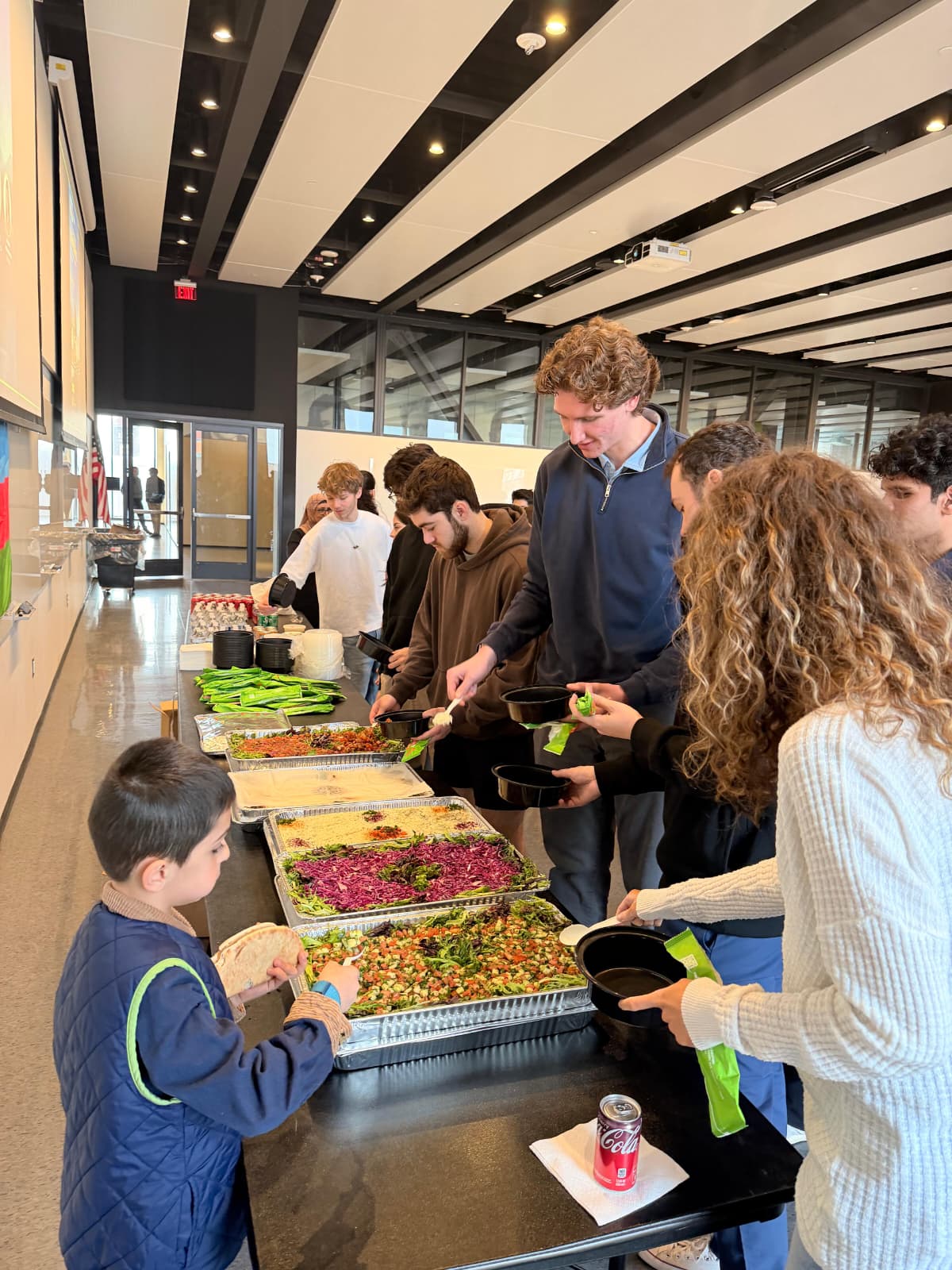
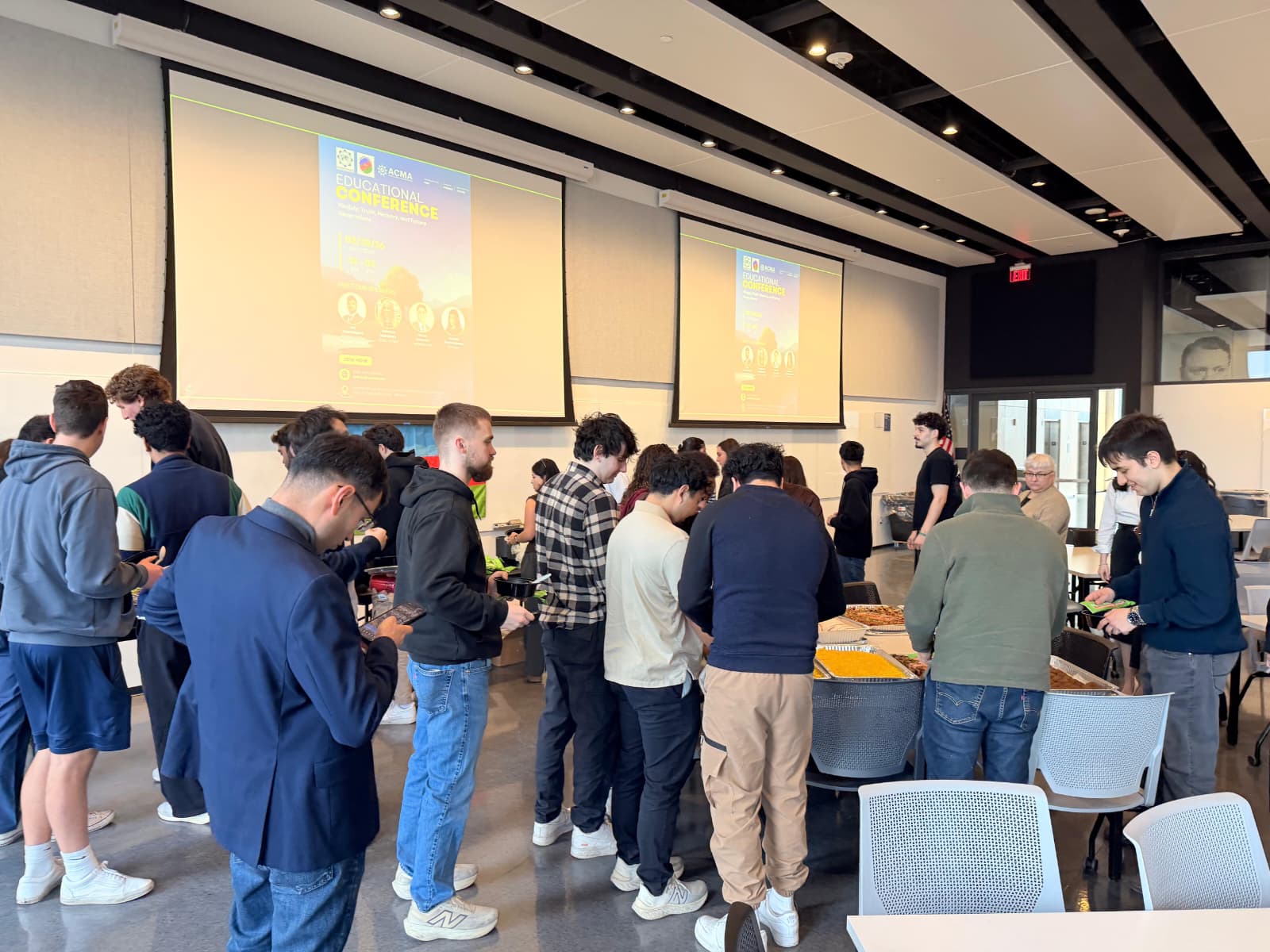
After the conference, participants were invited to a lunch buffet reception, providing an opportunity for networking, academic discussion, and community engagement among students, speakers, and guests.
Organizers stated that the purpose of the conference was educational and humanitarian — to encourage dialogue, preserve historical memory, and promote awareness about the consequences of violence against civilians.
About ACMA
The Azerbaijan Center of Midwest America (ACMA) is a nonprofit cultural and educational organization based in Illinois dedicated to promoting intercultural understanding, educational initiatives, and awareness of Azerbaijani history and heritage in the United States.